
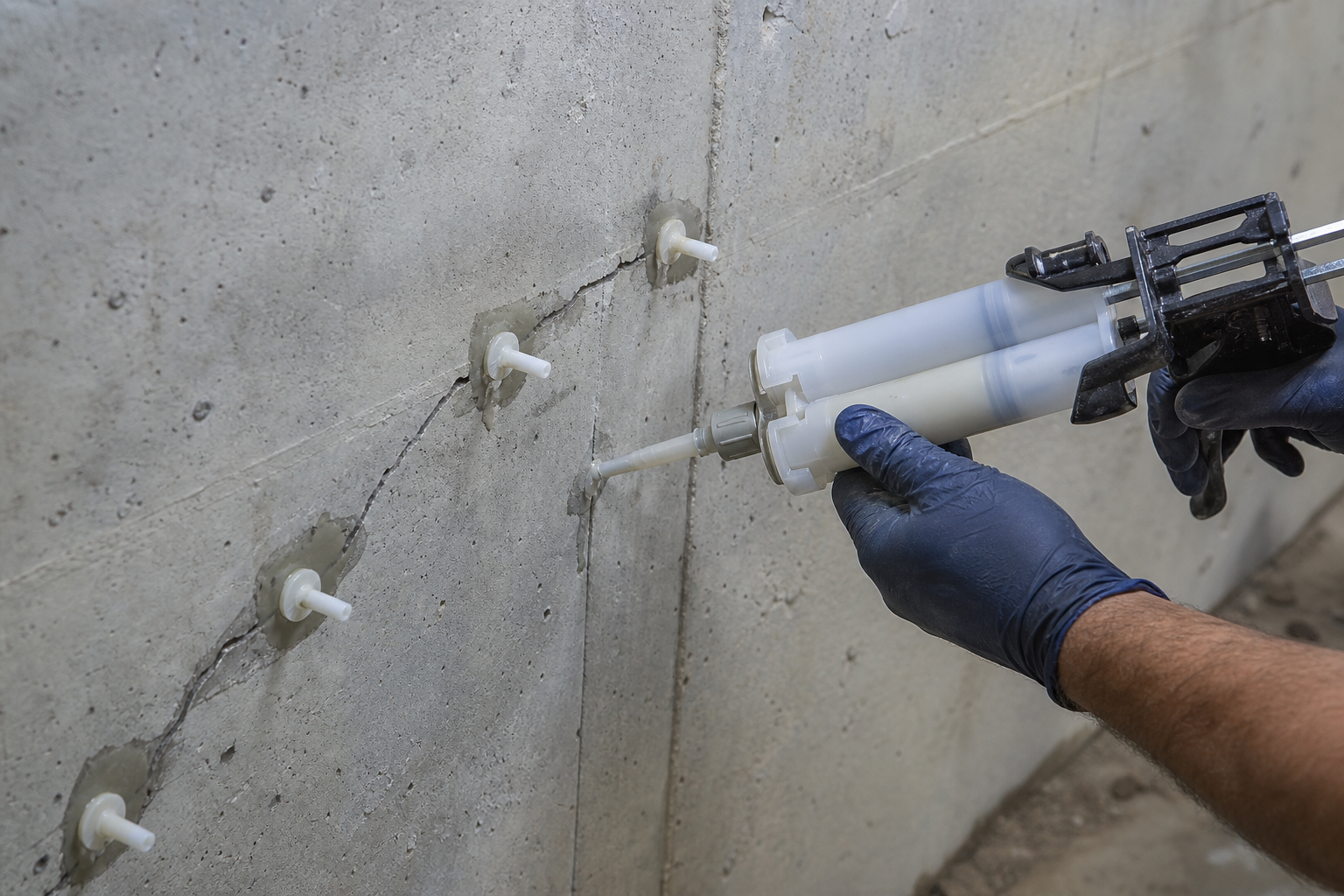
Southern Ontario winters are notoriously brutal, not just on our roads and vehicles, but on the very structures that keep us safe and warm. Between freezing rain, massive snowpacks, and temperatures that fluctuate wildly from deep freezes to sudden thaws, the soil surrounding your home becomes a powerful, dynamic, and highly destructive force.
The Danger of Freeze-Thaw Cycles
The core issue lies in a simple law of physics: water expands by roughly 9% when it freezes. In a typical winter across cities like Hamilton, Guelph, and Waterloo, the ground freezes downward from the surface, creating what geotechnical engineers call the "frost line." Depending on the severity of the winter, this frost line can penetrate 3 to 4 feet into the earth.
If the soil surrounding your foundation is properly drained and dry, this isn't a significant problem. However, if your weeping tiles have failed, or if poor grading allows water to puddle against your house, that saturated soil freezes rock-solid. As it freezes, the wet earth literally bonds itself to the porous concrete block or poured concrete of your foundation wall—a process known as adfreezing.
The Upward Tear and Frost Heave
As the winter progresses and the frost penetrates deeper into the ground, the expanding ice forces the saturated soil upward, because it is the path of least resistance. Because the frozen soil is bonded securely to your foundation wall, as it heaves upward, it takes the top of your foundation wall with it.
Concrete is incredibly strong under compression (weight pushing down), but it is very brittle under tension. The sheer vertical force of hundreds of thousands of pounds of heaving frozen soil can easily snap a concrete block wall in half horizontally. This usually manifests as a thick horizontal crack running along the top two or three courses of block, often accompanied by doors sticking on the floors above or brickwork separating on the exterior.
The Spring Thaw: Adding Hydrostatic Pressure
As if the winter freeze wasn't bad enough, the spring thaw introduces a secondary threat. When the massive snowpack begins to melt rapidly, combined with heavy spring rains, the heavy clay soils typical of Southern Ontario become totally saturated underwater.
This creates immense hydrostatic pressure. Thousands of gallons of heavy water push sideways against your foundation walls. If the concrete was already weakened or cracked during the winter freeze-thaw cycle, this spring hydrostatic pressure will easily force water through the cracks and flood your basement.
How to Prevent Winter Foundation Damage
Protecting your home from the Canadian winter requires a proactive approach to water management. Here are the core preventative measures:
- Ensure Positive Grading: The earth around your home must slope heavily away from the foundation. Water should naturally run away from the house so that the soil directly against the concrete remains as dry as possible before the deep freeze sets in.
- Extend Downspouts: Disconnect your downspouts from old, failing clay tiles and run them at least 6 to 10 feet away from the home using professional-grade extensions. Do not let roof water dump directly next to the foundation.
- Install Dimpled Membranes: If your foundation is already damaged, a proper exterior repair involves applying a rubberized waterproof envelope and installing a dimpled plastic membrane (like Delta-MS). When wet soil freezes against this plastic, it simply slides upward on the slippery dimples without gripping or lifting the concrete wall beneath.
Is Your Foundation Showing Winter Wear?
If you've noticed horizontal cracks forming, doors suddenly jamming in January, or water pooling near your walls, do not wait for the spring thaw to flood your basement. Call Foundations First at (905) 929-0441 for a professional assessment. We engineer permanent solutions designed specifically to withstand Southern Ontario winters.