
Your foundation is arguably the most critical and expensive component of your Southern Ontario home. It bears the entire weight of your house, fighting against the relentless forces of gravity, shifting soils, and severe weather. When a foundation begins to fail, the structural integrity of your entire living space is at risk.
Unfortunately, foundation problems rarely resolve themselves—they only worsen, becoming significantly more dangerous and expensive to repair over time. Knowing exactly what to look for can save you tens of thousands of dollars.
1. The Tell-Tale Stair-Step Cracks in Brick
Take a walk around the exterior of your home. If you have brick cladding, look closely at the mortar joints. Do you see cracks that zig-zag upward, resembling a set of stairs? "Stair-step cracks" are a classic, undeniable indicator of differential settlement.
This means that the concrete foundation footing beneath that specific section of the wall has settled deeper into the soil than the rest of the house, pulling the rigid brickwork apart. Depending on the severity of the drop, we typically recommend heavy-duty structural underpinning to lift the footing back to level.
2. Stubborn, Sticking Doors and Windows
It is common for homeowners to blame high summer humidity when their interior doors start jamming or failing to latch properly. While wood swelling does occur, if the problem persists year-round—especially in the dry winter months—it is likely an underlying structural issue.
If you notice doors rubbing against the top of the frame, or if there are diagonal drywall cracks extending outward from the upper corners of doorframes, it means the foundation settlement has caused the wood framing above to twist and warp out of square.
3. The Dreaded Horizontal Foundation Crack
When inspecting your unfinished basement, vertical hairline cracks in the concrete are standard and usually harmless results of the concrete shrinking as it cured decades ago.
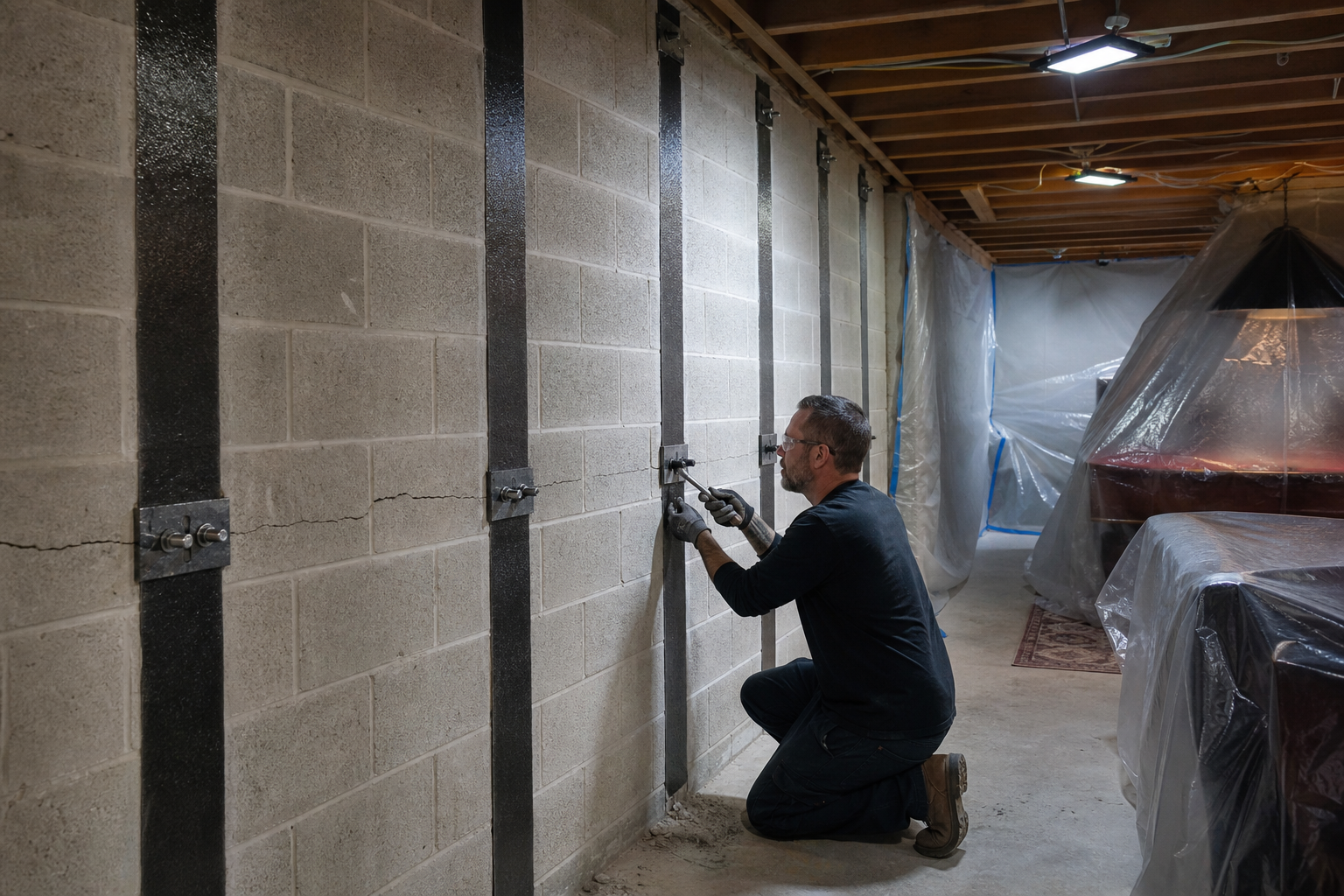
A horizontal crack, however, is a massive red flag. This means the sheer weight of saturated soil freezing, expanding, and pushing against your foundation wall (hydrostatic pressure and frost heave) has literally snapped the concrete wall in half. The wall is bowing inward and losing its structural capacity to hold up the house above. This requires immediate stabilization using Carbon Fiber Kevlar straps or steel I-beam wall anchors.
4. Unexplained Dampness, Mustiness, and Efflorescence
A failing foundation isn't always marked by dramatic cracks; sometimes, it's marked by water. If your basement constantly smells like a wet dog, or you notice "efflorescence" (a chalky white powder) blooming on the surface of the concrete block, water is actively penetrating the wall.
This means your original exterior waterproofing membrane and weeping tile drainage system have failed or deteriorated entirely. Over time, this constant dampness will rot wood framing and invite toxic black mold.
5. Gaps Between the Interior Walls and the Ceiling
As floors sag due to sinking foundation supports or rotting crawl space beams, they take the interior walls down with them. Look closely at the upper corners of your rooms, where your interior partition walls meet the ceiling.
If you see cracked drywall tape, popped nails, or actual physical gaps opening up between the wall plate and the ceiling drywall, your home's central supports are sinking. This often requires installing new adjustable steel teleposts in the basement to slowly jack the floors back to their proper elevation.
Don't Wait Until it's Too Late
If you've checked these 5 signs and noticed red flags in your own home, do not wait for the problem to accelerate. Call Foundations First at (905) 929-0441 immediately for a free, comprehensive structural assessment. Catching a problem early is the difference between an affordable crack injection and a massively expensive foundation rebuild.